
Can South Africa Measure Its Economy in Real Time?

This webinar draws on new research from the Southern Africa – Towards Inclusive Economic Development (SA–TIED) programme, exploring how high-frequency data can complement traditional economic statistics and provide a more timely picture of economic activity in South Africa.
The findings show that revisions to headline GDP are generally modest, but significant differences exist across sectors. Agriculture, in particular, is difficult to measure in real time due to delays in obtaining information on production, prices, and input costs, resulting in larger and more volatile revisions. The research proposes the development of a real-time economic barometer that combines information from electricity generation, electronic transactions, mobility trends, online prices, and satellite imagery.
Speakers Helanya Fourie and Professor Johan Fourie will unpack:
- Where GDP falls short in capturing economic activity as it unfolds.
- What revisions to South Africa’s GDP estimates reveal about the reliability of early economic indicators.
- Why some sectors, particularly agriculture, are more challenging to measure in real time.
- How electricity, payments, mobility, satellite, and online price data can strengthen economic monitoring.
- How a real-time economic barometer could support faster and better-informed policy decisions.
- What governance, institutional, and data-sharing arrangements would be required to make such a system possible.
The presentation is based on SA–TIED research examining the feasibility of developing a real-time economic activity barometer for South Africa and the role of high-frequency data in improving economic monitoring and policy.
Join us for an insightful discussion on how innovative data sources can enhance economic monitoring and support more informed policymaking in South Africa.
Speakers
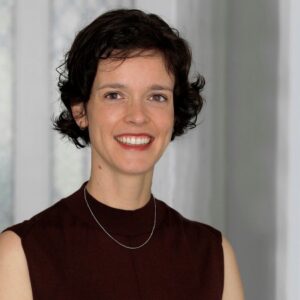
Helanya Fourie
Senior Economist, Bureau of Economic Research
Helanya is a senior economist at the Bureau of Economic Research. She holds an MCom in Economics from Stellenbosch University and an MSc in Competition and Regulation from Utrecht University. She is currently completing a PhD about the impact of digital technologies in South Africa’s urban townships. Before joining the BER, she worked in both the public and private sectors and advised firms on competition and regulatory matters at FTI Consulting and Econex. Her work at the BER focuses on the linkages between economic reform, jobs, and growth.

Professor Johan Fourie
Professor of Economics, Stellenbosch University
Johan is a Professor of Economics and Chair of Economics, History and Policy at Stellenbosch University, where he also directs LEAP, the Laboratory for the Economics of Africa’s Past. He teaches economic history to undergraduate and graduate students, and regularly publishes on the subject academically, through journal articles and book chapters. His book, Our Long Walk to Economic Freedom (CUP), offers an accessible and engaging introduction to economic history from an African perspective. He writes a popular blog at ourlongwalk.com.